
- Welcome to the Osaka Museum of Natural
- Naumann Hall
- 1st Exhibition Room
- Nature in Osaka that you can learn in the Museum
- 2nd Exhibition Room
- 3rd Exhibition Room
- No.4 exhibition (Gallery)
- 5th Exhibition Room
- Learning about organism diversity and about mankind in the Museum
- Column "Nagasuke", "Makko"
- Exhibition Room: "Nature of Osaka"
- For Kids
Naumann’s elephants existed in Osaka!
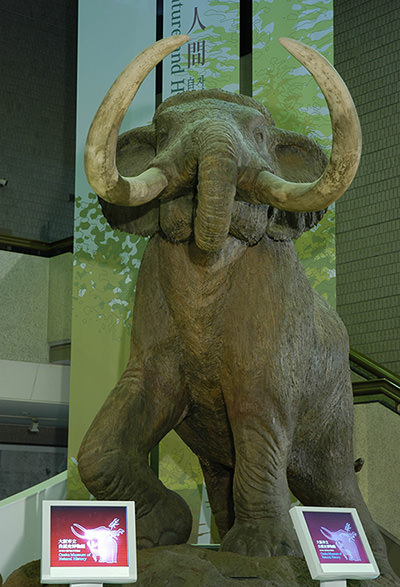
Naumann’s elephants lived in Japan until 20 thousand years ago. Footprints and pieces of their teeth were found near the Museum. Maybe people in Osaka way back in time hunted Naumann’s elephants.
Were there elephants in Osaka too?
A long time ago, big elephants were clumping around Osaka.
These are fossils of those elephants’ teeth.
What we found from the uderground us amazing stories of ancient Osaka.
When Naumann’s elephants walked...
There are strange patterns on the floor. These are elephant footprints.
Naumann’s elephants walked around in Osaka a long time ago.
How long were their strides when walking? We reproduced them with the help of fossils footprints.
Sanukite
Ancient people made knives and spearheads out of this stone. Touch it gently, so as not to hurt yourself.
The surface, which was exposed to rain and wind for a long time, is rough, but the inside of the stone is very hard and fine. The tip of the broken piece is very sharp. People from the Old Stone Age and the Jomon period who lived in Setouchi region including Osaka made knives, spearheads, arrowheads, and other tools from broken pieces of this stone. Sanukite was a necessary and important material to make tools for hunting and cooking during the Stone Age, when metals were not being used. This stone was named because a lot of it was found in Sanuki (Kagawa prefecture, now). It is distributed along the shoreline area of Setonaikai inland sea, and can also be found in Mount Nijozan. It is called Kankan-ishi because of the clear sound it makes when it is hit.
Secrets of cockroaches
When did they appear on earth?
Wow, it was 300 million years ago.
They were on the earth way before humans. They can climb straight up walls, eat anything, run fast… They have many strong traits.
How many kinds of them are in Japan?
There are about 50 kinds of cockroaches in Japan, in woods and homes. They love people’s homes because it’s heated and warm! There are about 6 different types of cockroaches that live in our homes.
How many eggs do they lay?
Have you ever seen cockroaches holding something at the tip of their bellies?
That is an egg bag, and it holds about 30 eggs.
They say that the number of eggs that a single female lays in her lifetime is 200 to 600!
What did people eat, a long time ago?
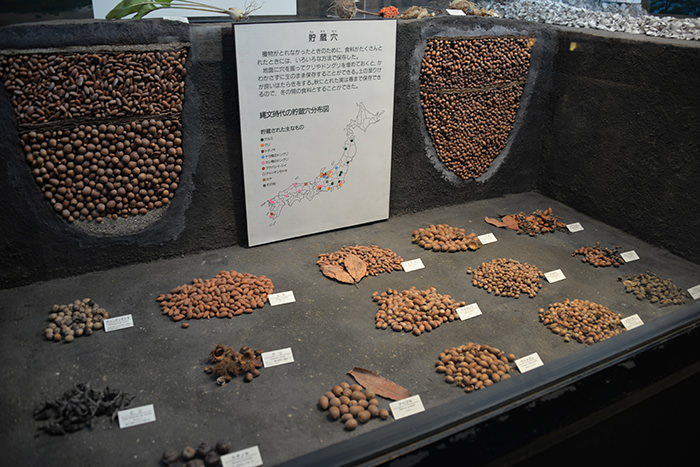
This is a storage for acorns! They say that burying them keeps them fresh until next spring.
Acorns were important food for these ancient people
Fossil of a finback whale (jawbone)
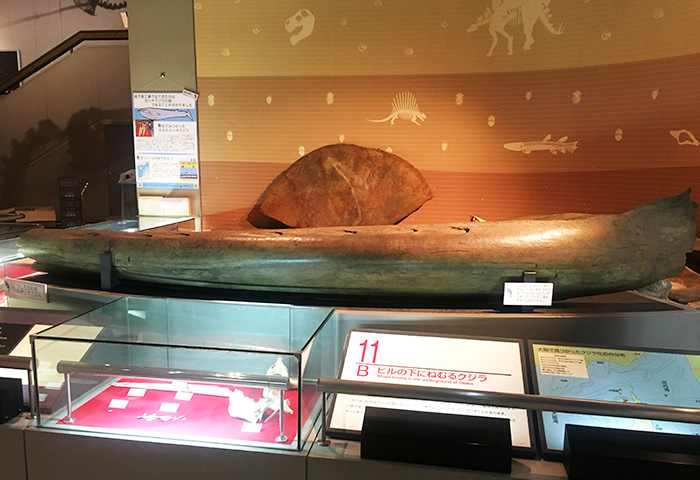
This is a whale’s jawbone. Can you see the hole on top? This is a hole that nerves passed through. These whales had no teeth.
The Machikane-wani crocodile
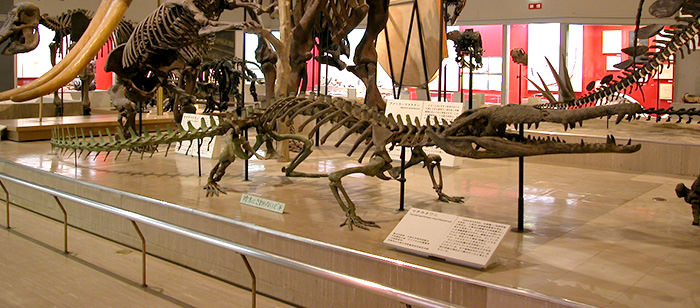
Four hundred thousand years ago, when people were not living in Osaka, these big crocodiles were walking around.
When people were building university school buildings in Toyonaka city, they found small pieces of bones. Then, after digging there 4 times and doing research, they found bones of an 8 meter long big crocodile. It was named the Machikane-wani crocodile after the name of where it was found: Machikane-yama!
Sinomegaceros yabei
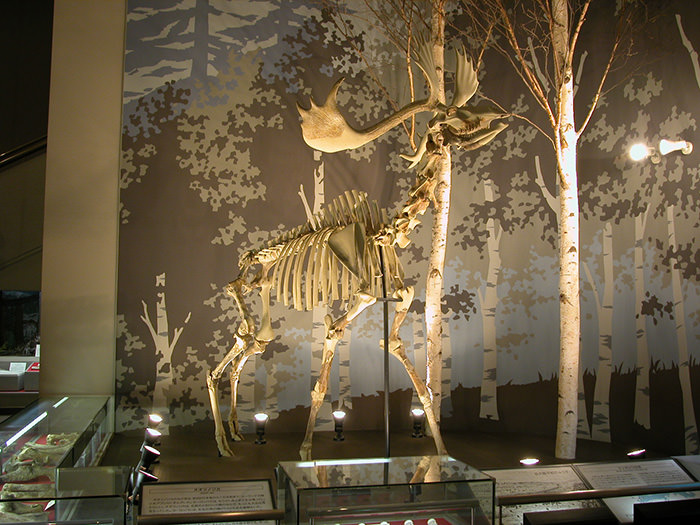
This fossil was found in a cave in Gifu prefecture. Big deer like this lived in Japan 10 thousand years ago.
I wonder if ancient people hunted Sinomegaceros yabei?
Naumann’s elephant fossil (jaw bone)
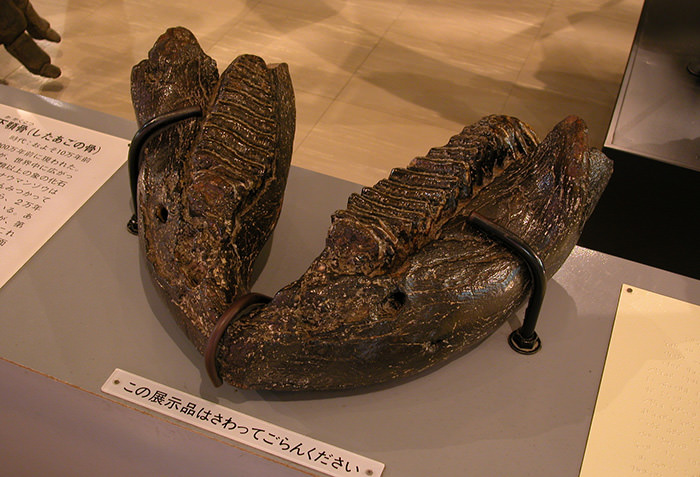
This fossil was found from the bottom of the ocean floor. A fisherman caught it in his net when he was fishing.
Isn’t it surprising that we had such big elephants in Japan?
Boom, goes the volcano!
A long long time ago, there was a volcano near Mount Nijozan in Osaka! After it erupted, many kinds of stones were created. What do they feel like? Try and touch it!
What do you look like?
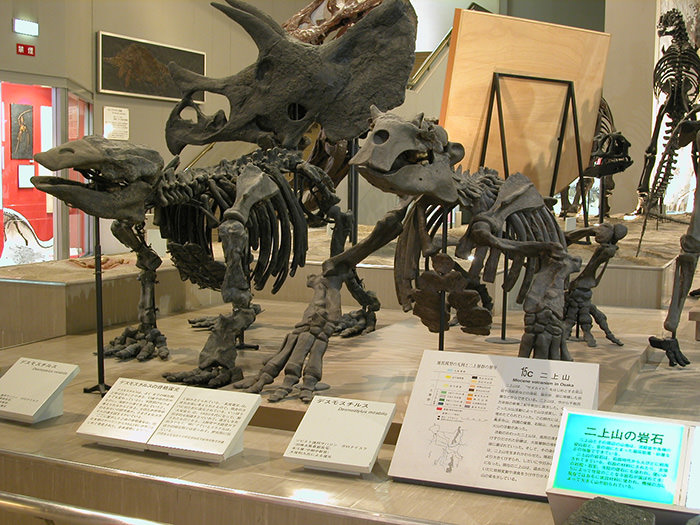
What’s this? There are 2 animals with the same name. This animal is called the Desmostylus.
It was very mysterious back when we found it, because it didn’t look like any other animal. So a lot of different people studied it. At first, we thought it looked like the way it does on the left, but we think that it’s supposed to look like the one on the right.
Compare the differences in body shape of these two.
Coal
Coal is made from ancient plants. We used to use coal to run trains and to fuel heaters about 40 years ago. I wonder how a black rock like this can have so much energy.
Ammonite
Ammonites used to live in the ancient ocean. They are extinct now, and we aren’t able to see it anymore. Touch it gently.
This specimen is a fossil of a kind of ammonite called Eupachydiscus, and was found from a ground layer in Hokkaido dating to the Upper Cretaceous period (about 85 million years ago). The inside of its shell was separated by a type of wall called dissepiments. Specimens like this fossil with scraped outer shells sometimes have complicated curves that look like mum leaves. These curves exist at the intersection of dissepiments and outer shells, and are called suture lines. Since dissepiments are not flat and intricately crooked, these curves are formed.
Apatosaurus footprints
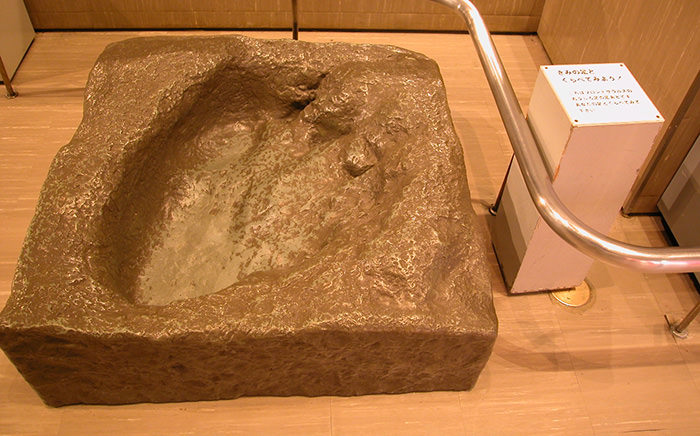
Apatosaurus are very huge dinosaurs. Its body was 20 meters long and they weighed 30 tons! Put your foot into their footprints and compare them. How many times bigger are they than yours?
Touch the dinosaurs’ fossils
These are real fossils of dinosaur feet bones. They were found in Africa.
The owner of these bones must have been a gigantic dinosaur.
The world of minerals
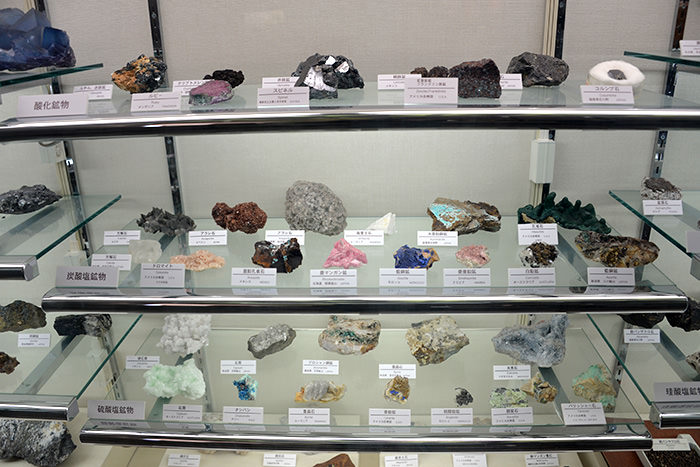
Look at these many twinkling beautiful stone-like chunks!
Many minerals exist on earth. The things we need in life, like kettles or 10 yen coins, are made out of minerals. If you make jewelry out of beautiful minerals… you can make rings and necklaces!
Black quartz (quartz)
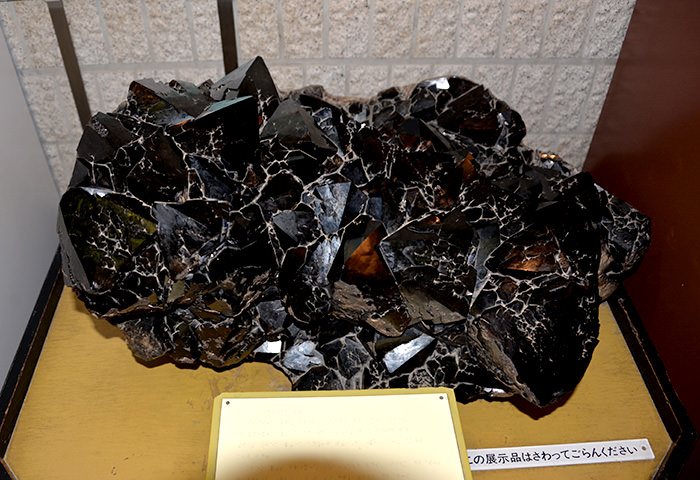
Beautiful stones, aren’t they? Hexagonal crystals have gathered to see which is the tallest.
Try touching the smooth parts.
The shape of the crystals is very orderly, and looks like a party hat with a hexagonal cone on top of a hexagonal column. The crystal face is flat, but if you touch it, it feels rough. This is because first, a big crystal was formed, and then the small crystals formed on top of its face. The smaller crystals are also the same shape as the big crystal.
The earth is full of bugs!
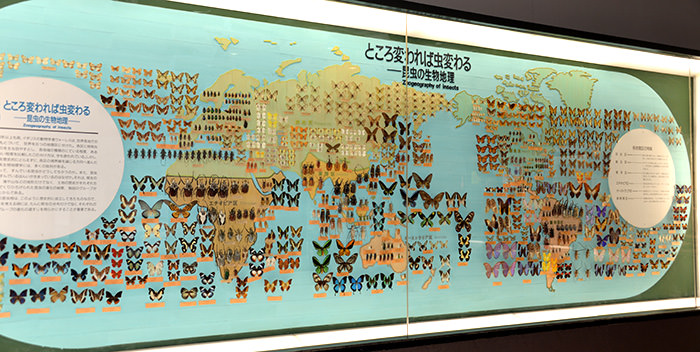
Where do bugs live?
Do they live in the sea? I wonder if there are bugs in Antarctica, too?
Are they also in poop?
Seeds with big wings
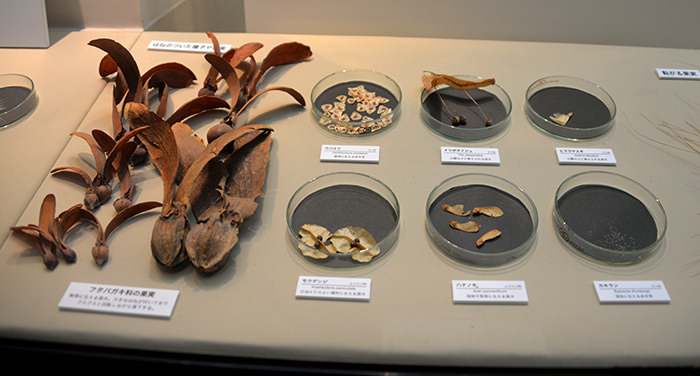
This is a dipterocarp seed. It has big wings. Dipterocarps are big trees that grow in the tropics. They can grow up to 50 meters tall. What do you think will happen if this seed falls from such a high place? Press the button to find out!
If they find you, surprise them!
When a butterfly gets found by a bird, the butterfly flashes its big, round eye-like design on their wings to surprise it. Then, it runs away while the bird is surprised. Let’s see the eyeballs beneath their wings.
Press the button to take a look!
The biggest crab in the world
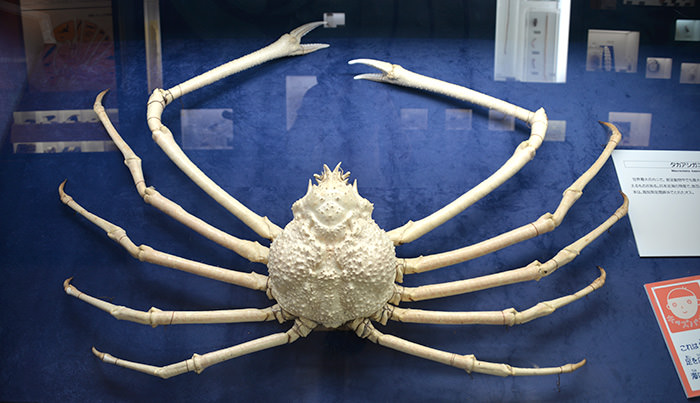
This is the world’s biggest crab: the Japanese spider crab.
When it spreads its limbs, it becomes as big as 3 meters wide. They live in the ocean near Japan.
Huge clams in the South Pacific.
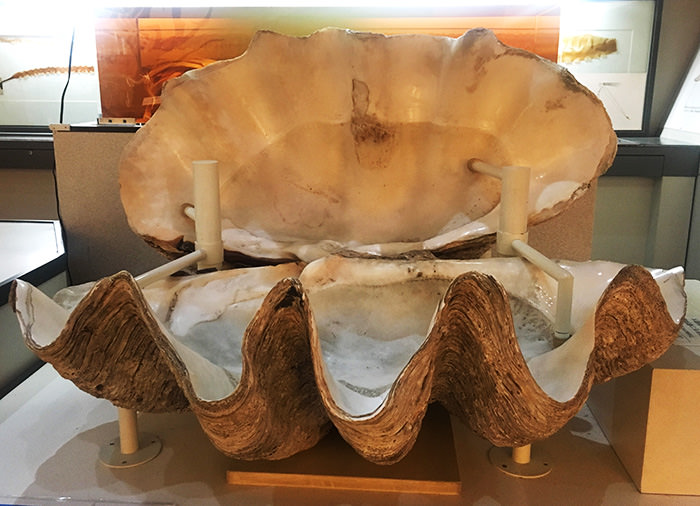
Huge clams live in the South Pacific Ocean. The giant clam is the biggest bivalve in the world.
The Australian trumpet shell is the biggest conch in the world.
Where did the plants that we eat come from?
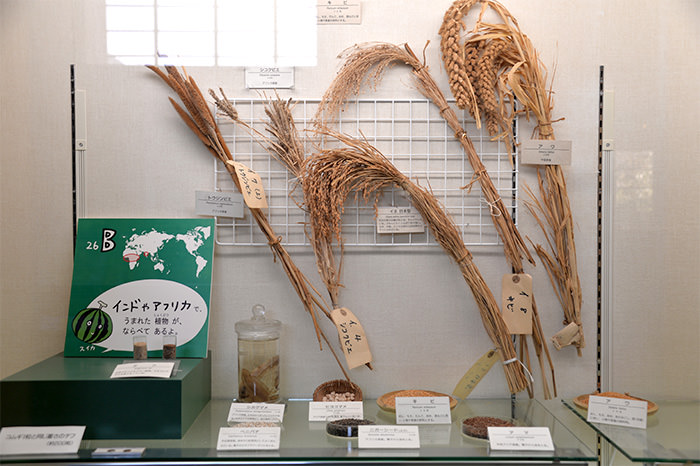
This section has a lot of plants. Which part of the world did the vegetables and fruits that we eat come from?
Banana seeds
Have you ever seen a banana seed?
The bananas that we eat don’t have seeds, but they say that wild bananas in tropical mountains do.
We think that bananas are fruits without seeds, but wild bananas have impressively big seeds. The reason why cultivated bananas don’t have seeds is the same reason why seedless watermelons don’t have seeds. They are both triploids.
Roly-poly acorns
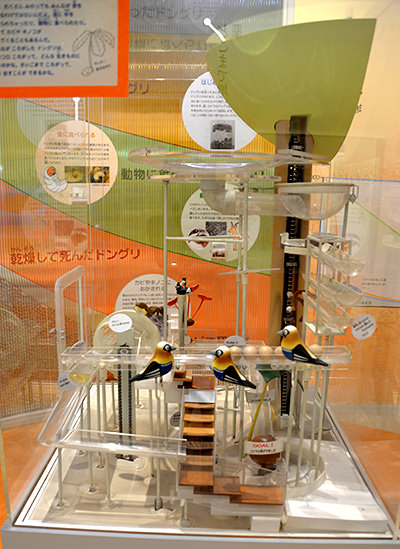
Oaks grow a lot of acorns every year, don’t they? Many of them fall, but they don’t all grow to be oaks. Acorns have to survive bugs, birds and animals that try to eat them before they can sprout. Can it succeed in sprouting without any problems?
Roly-poly acorns… what happens to them?
This acorn is a baby of a konara oak. Even though many were born, not every single one of them can sprout. Some are chewed on the inside by bugs, and others are eaten by animals. Sometimes, fungi or mushrooms grow on them. What other living things do the acorns that get rolled around by us see? Can they roll to the finish line and sprout successfully?
Will the mushrooms grow? Come out, mushrooms!
What kind of places do mushrooms grow out of?
Mushrooms don’t appear just anywhere. They have places that they prefer. Can you make mushrooms grow by gathering the places that they like?
Matsutake mushroom, small tree, Japanese red pine
Honey mushroom, healthy roots, Konara oak, Plum, etc.
Fomitopsis pinicola, weakened trunk, Japanese red pine, fir, etc.
Nature in Satoyama
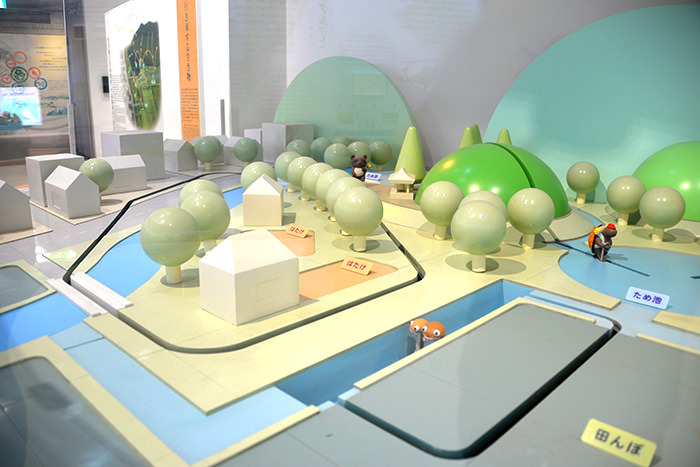
This is just on the outskirts of town. There are many environments like mountains and woods, rice fields, and ponds, so many living things besides humans are here, too. How do they live? Press the button to make the living things start moving. How do they live during the fall and winter? Are there any early birds? Does anybody go out at night? Do they go out to eat? What are they going to do?
Every time you press the button, you will see how these living things move around in the morning, during the day, and at night, in spring, summer, fall, and winter. An explanation will be projected onto the front wall.